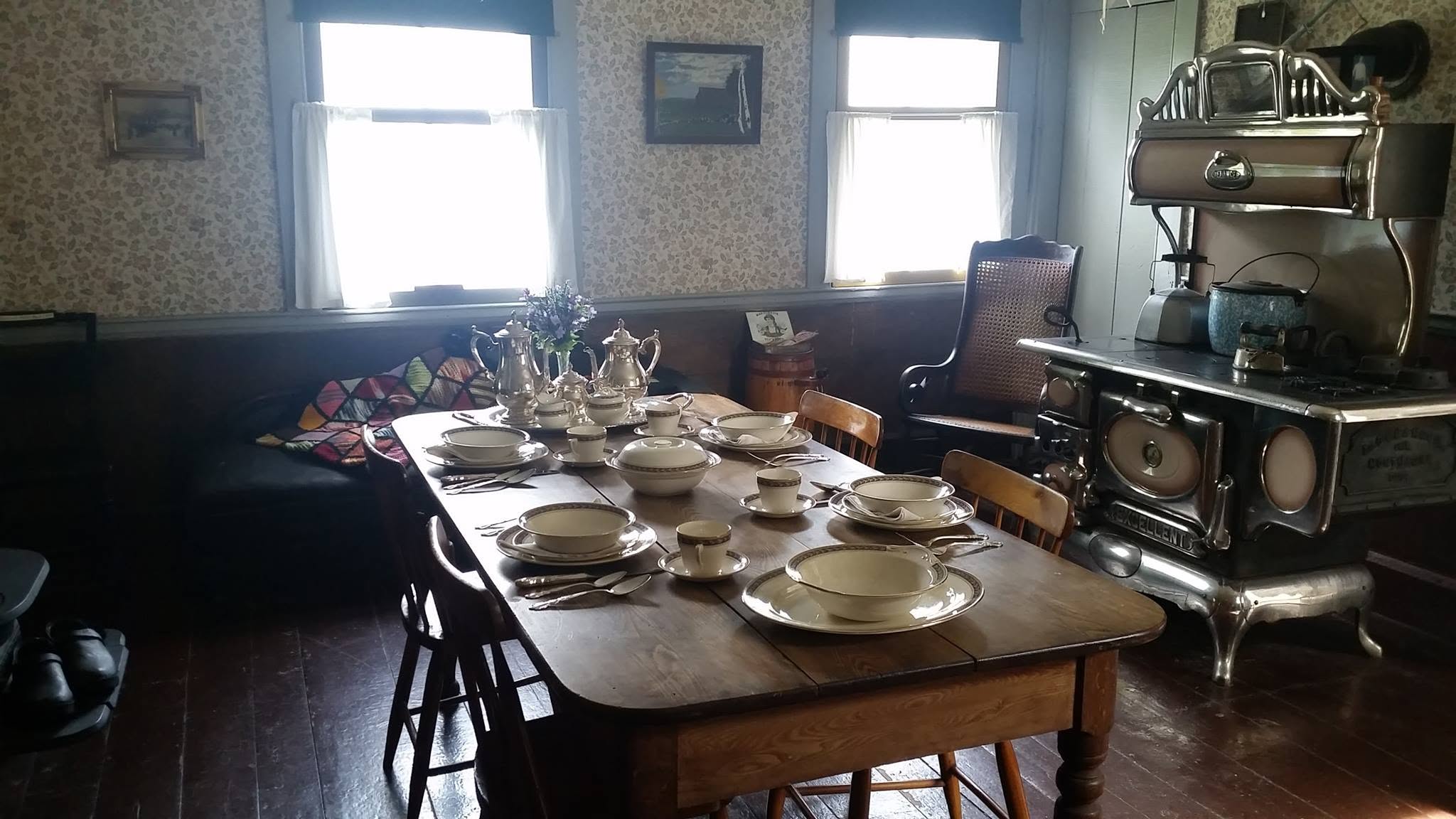
 01
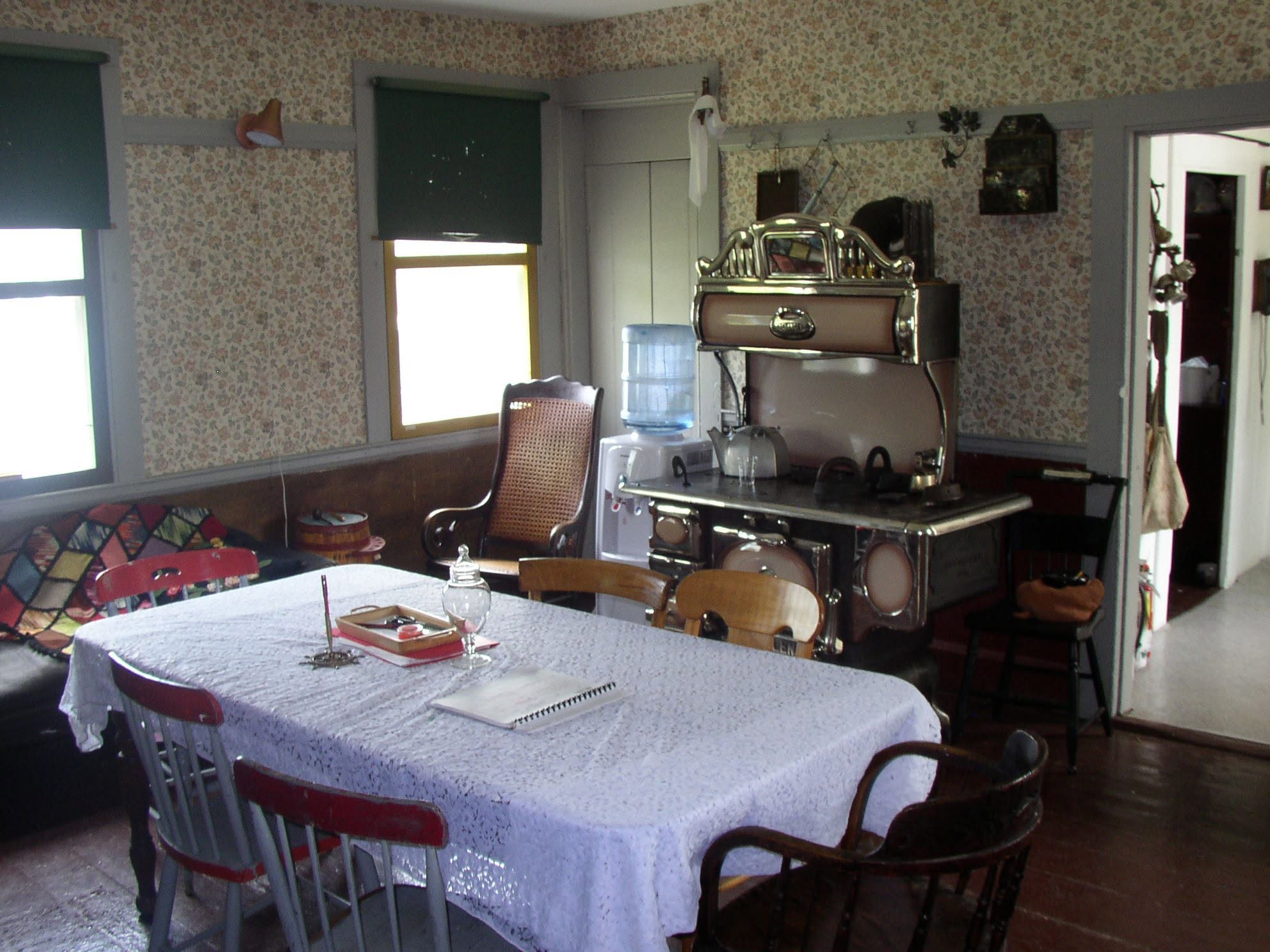
The Kitchen
The wood-fired cookstove, the table set for tea, an old-model washing machine and a muzzle loader with a story behind it.
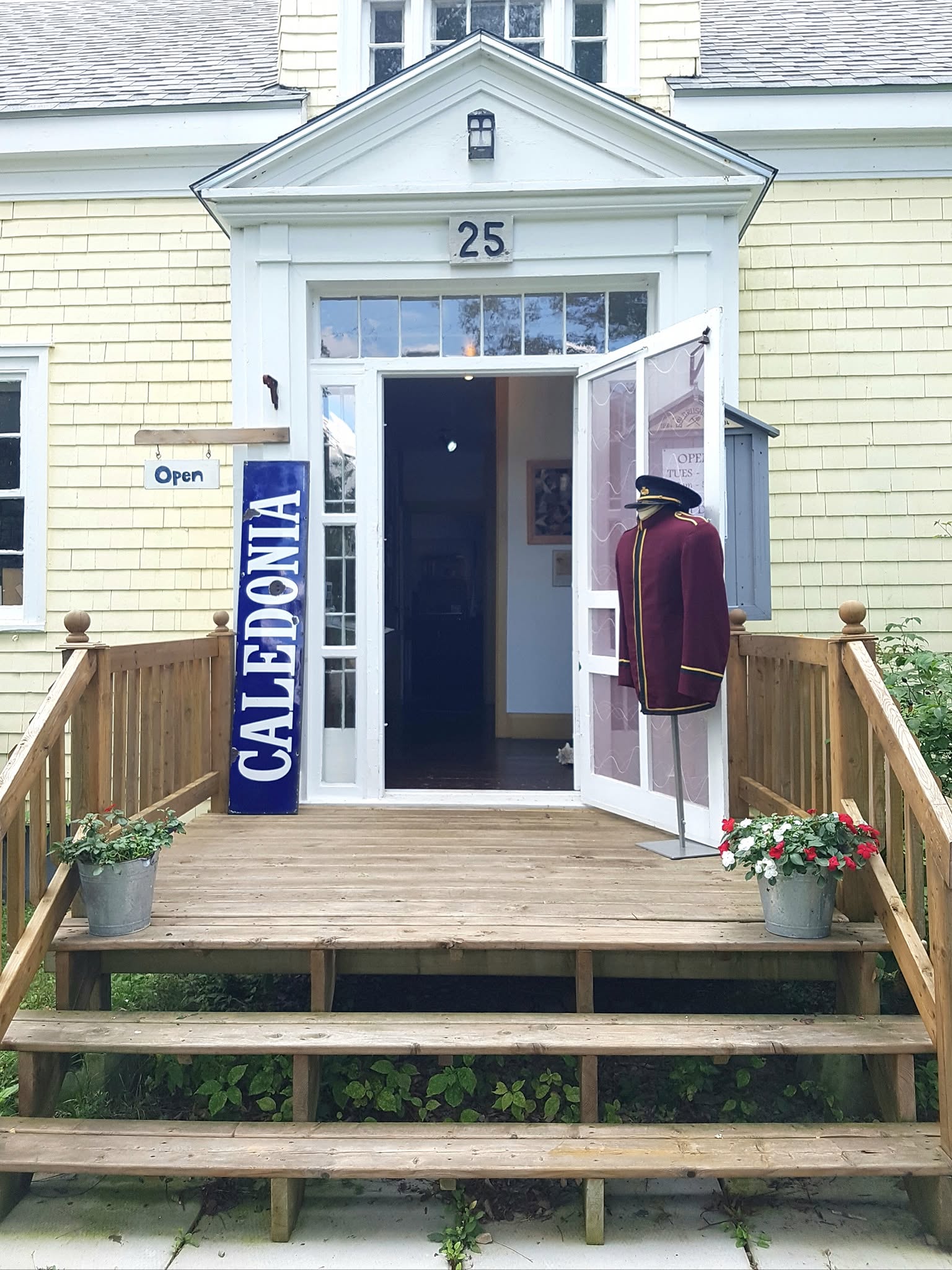
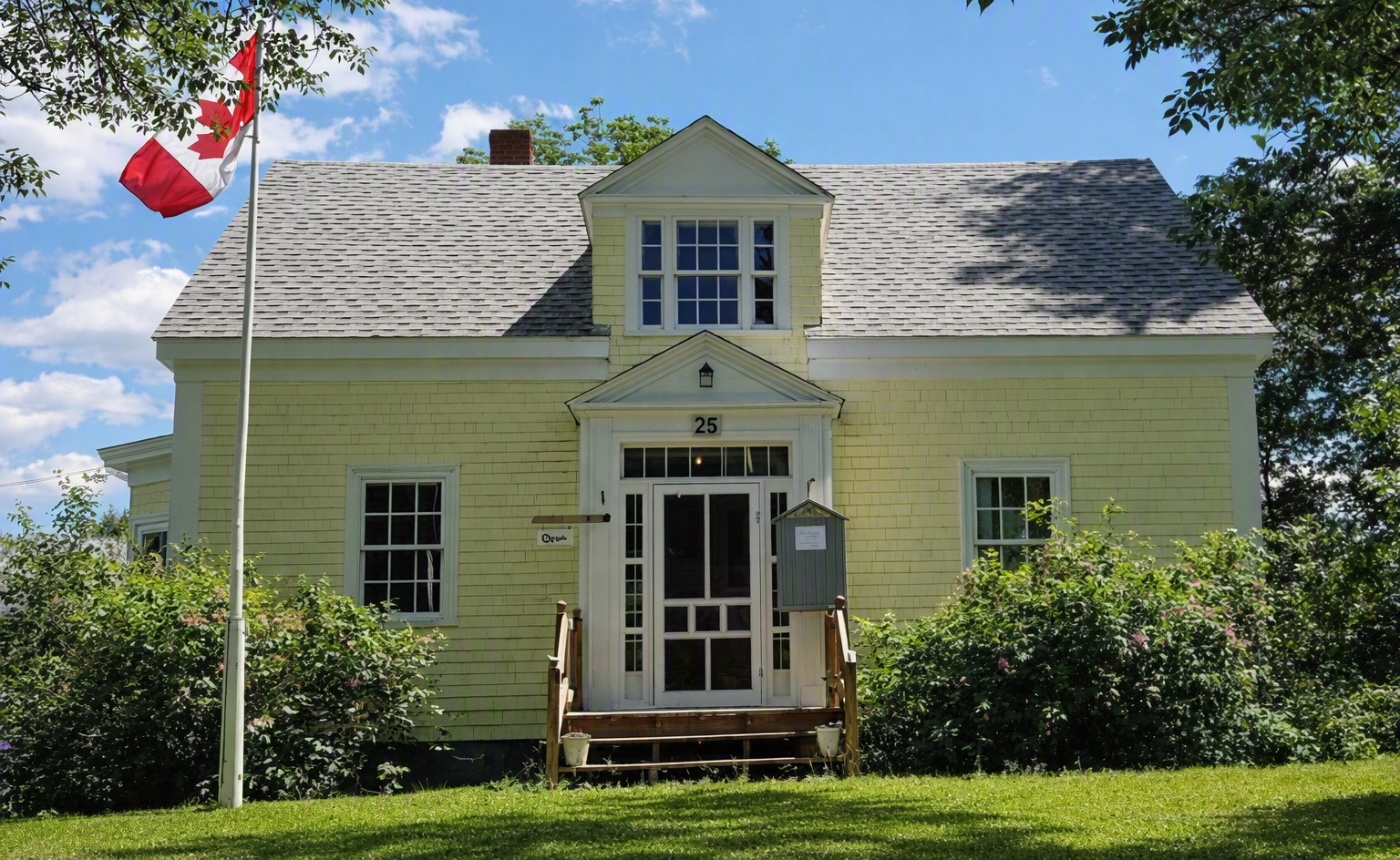
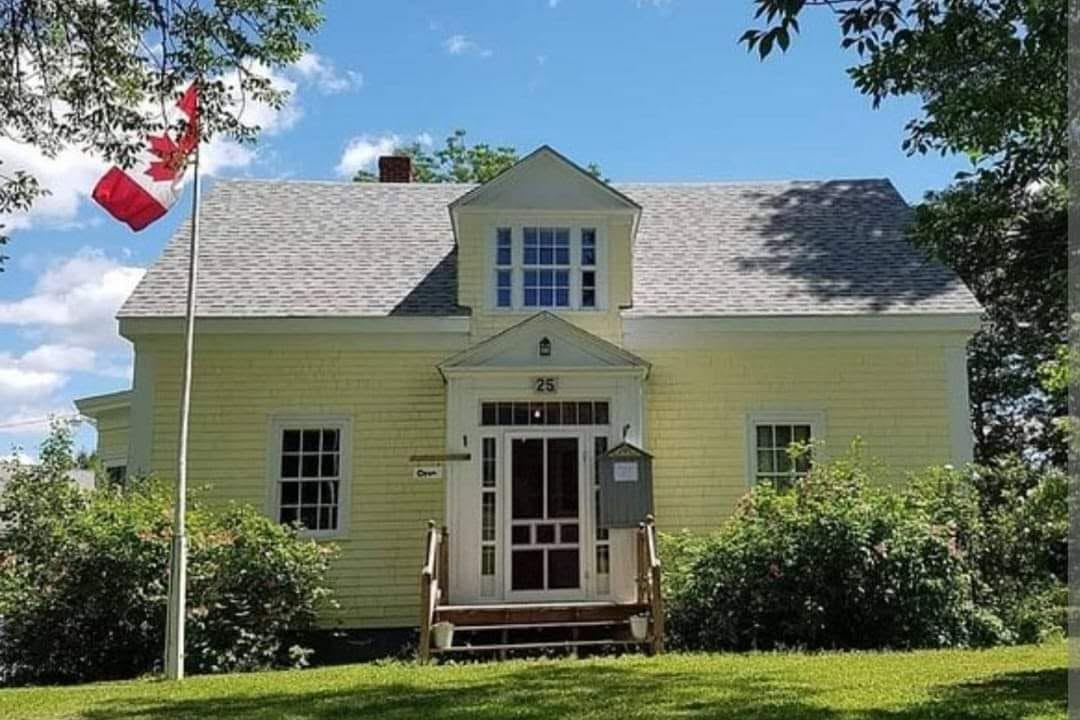
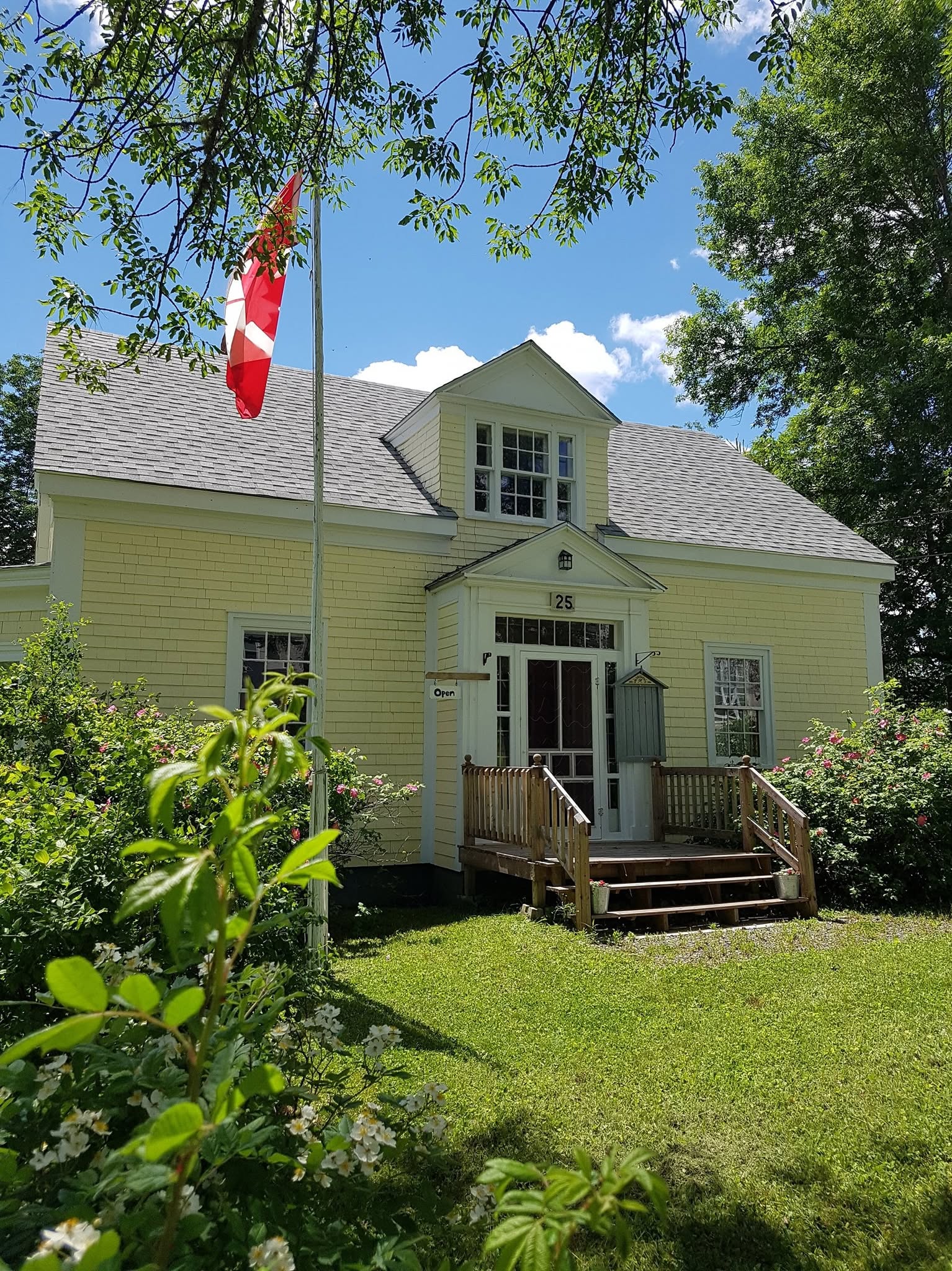
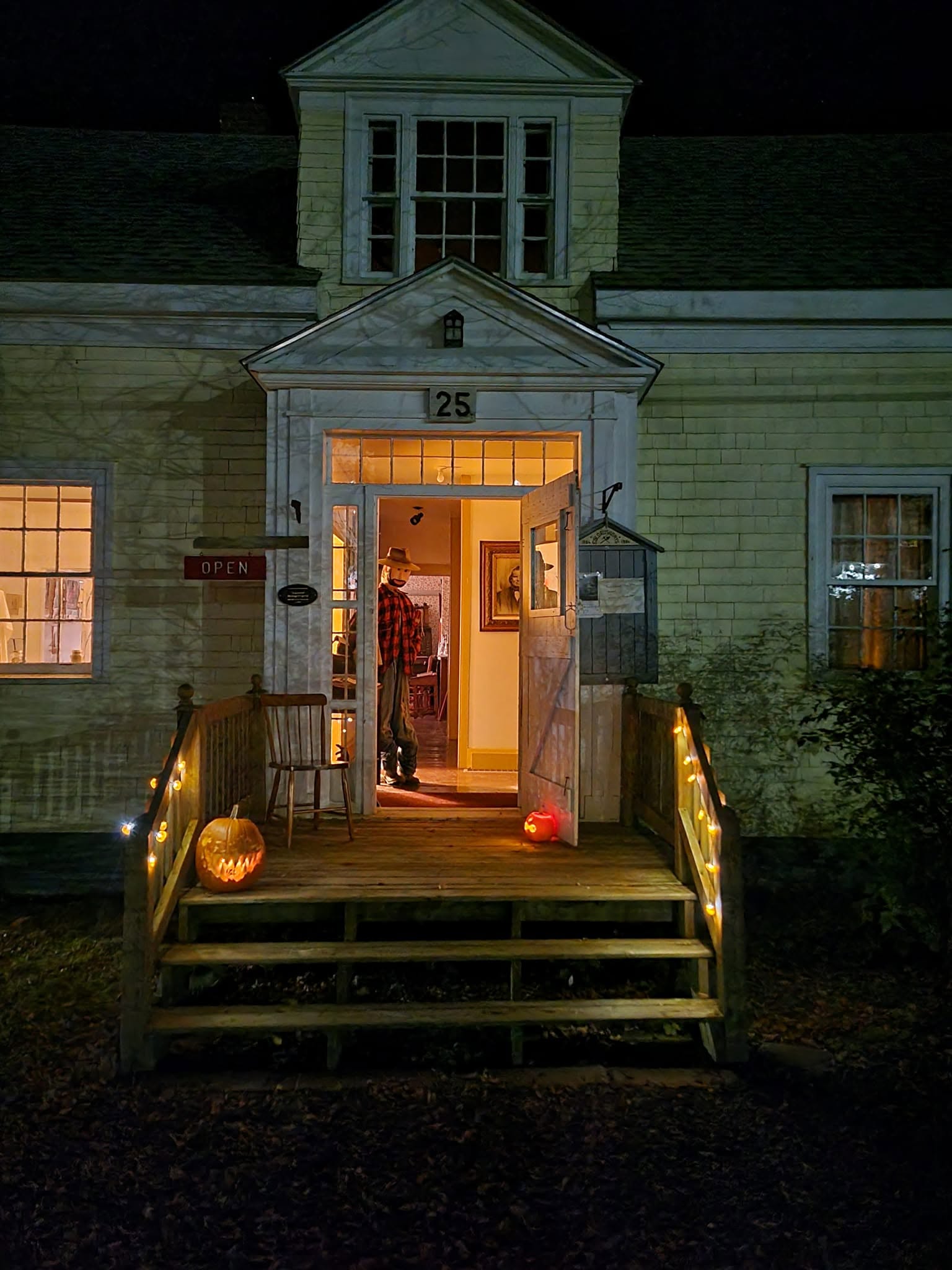
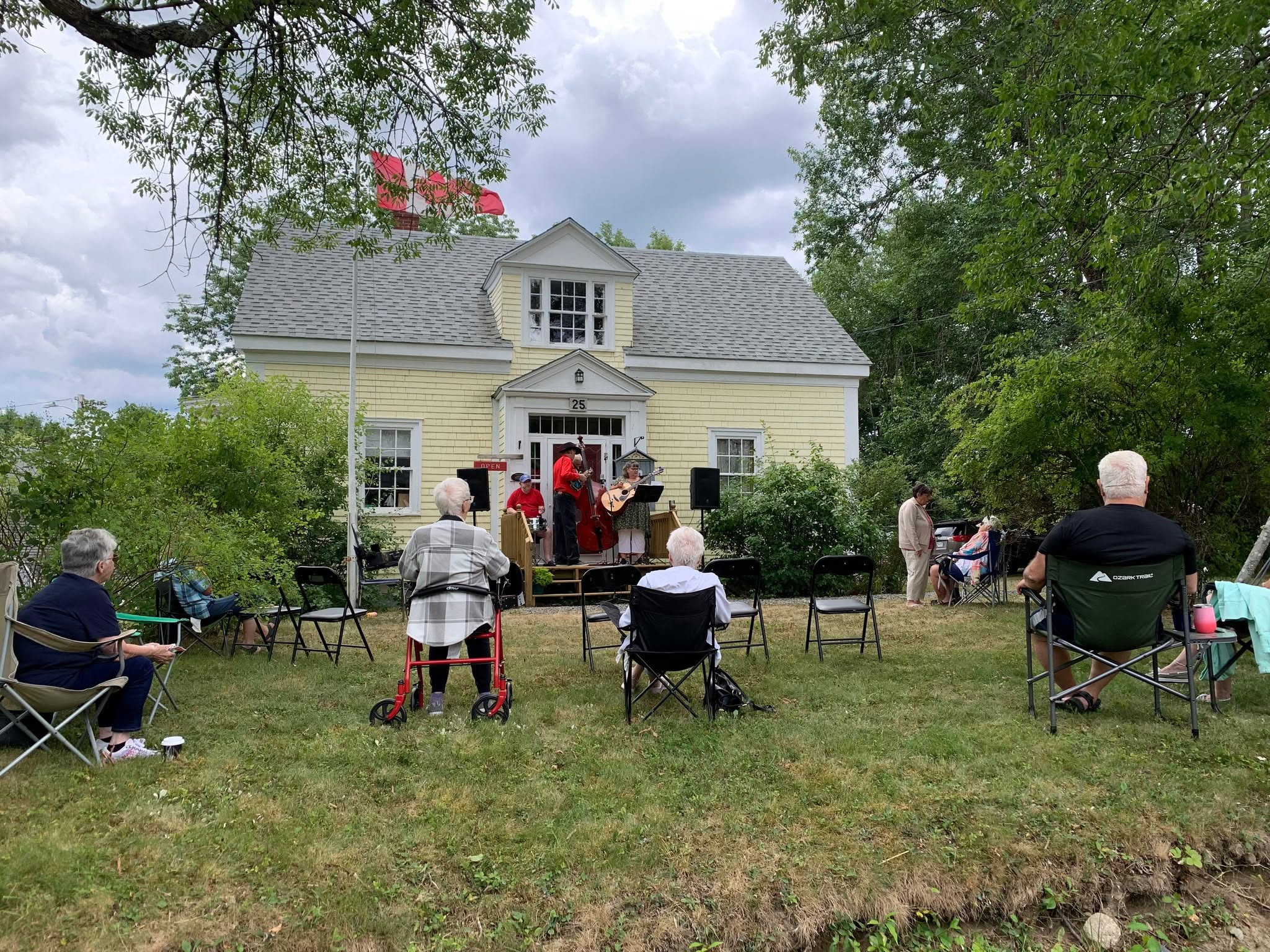
For 172 years the Douglas house has stood on West Caledonia Road. Step inside one of the oldest homes in North Queens.
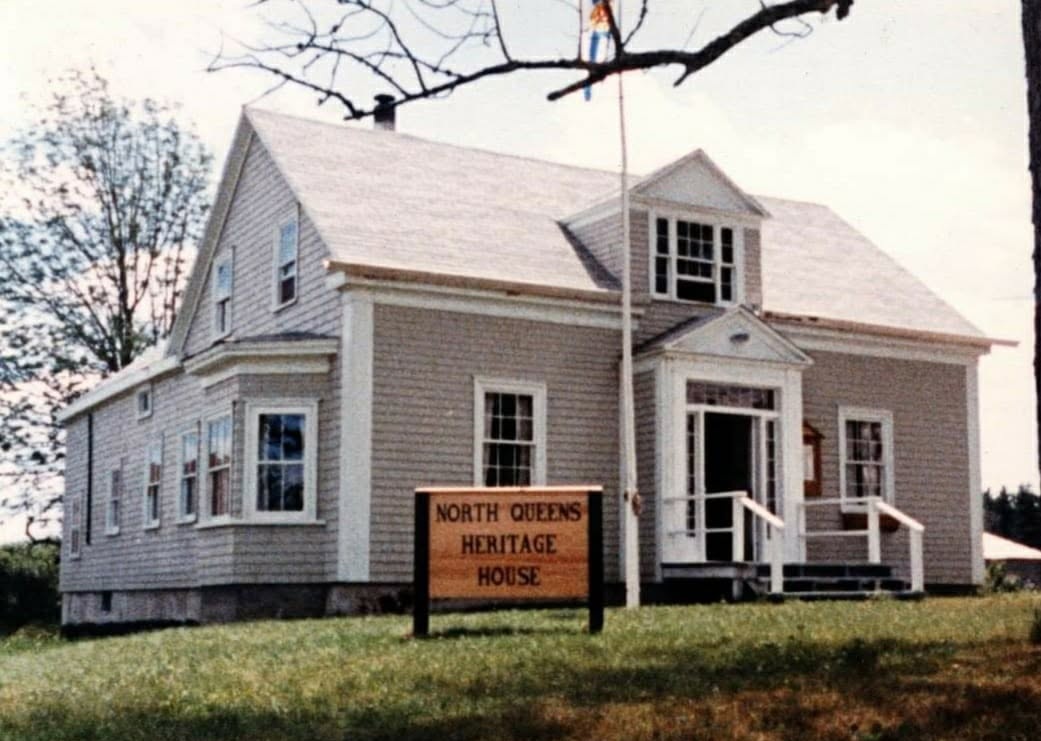
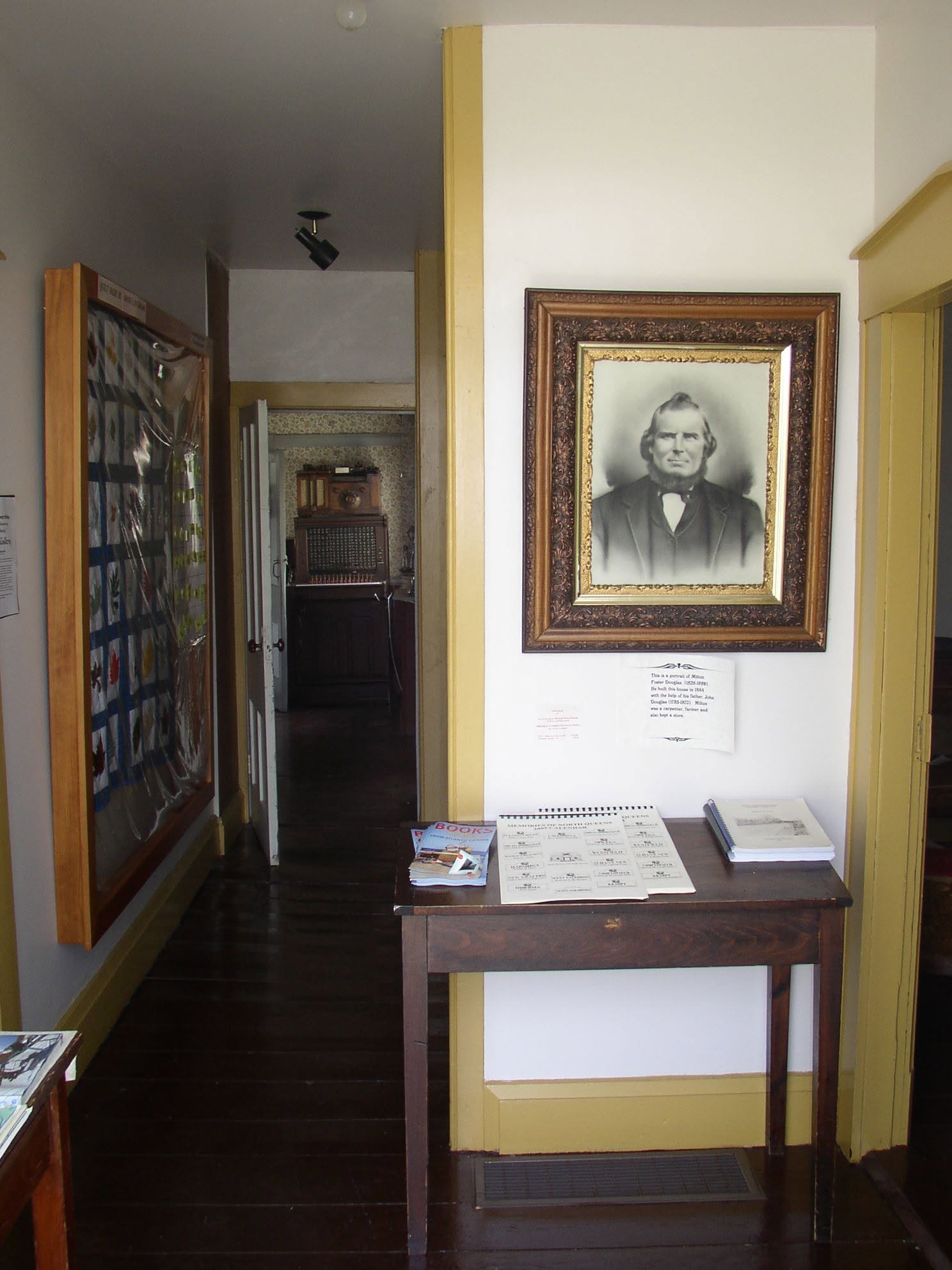
The North Queens Heritage House was built in 1854 by Milton Foster Douglas, with his father John - one of the eight pioneers who settled Caledonia in 1820.
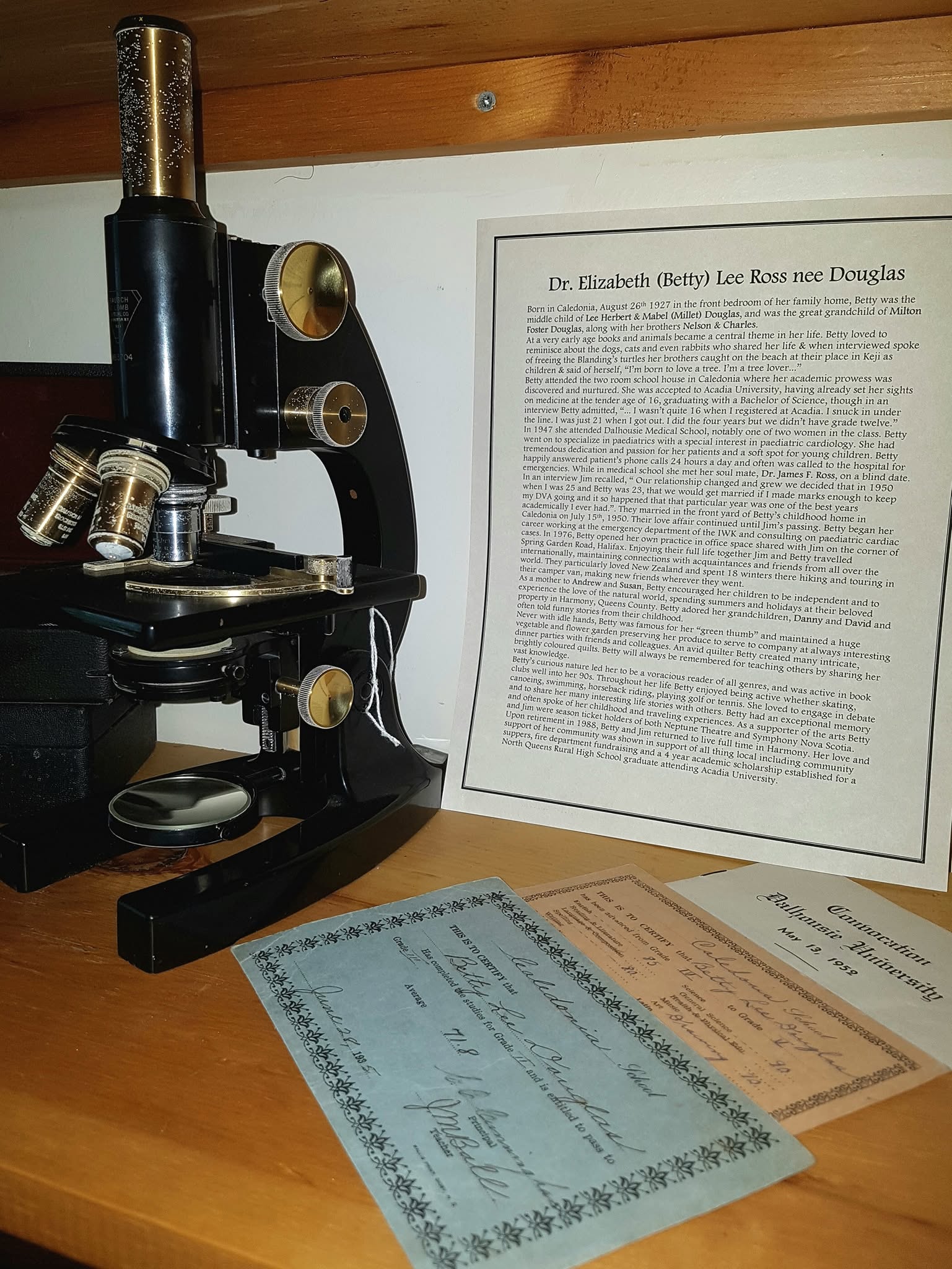
It is one of the oldest houses in the area: a modest farmhouse with a centre dormer and a pedimented front entry, raised on land the family had cleared a generation before. It remained in the Douglas family for well over a century, and Dr. Elizabeth "Betty" Lee Ross - later a pioneering paediatric cardiologist - was born in it in 1927.
Today the North Queens Heritage Society keeps the house as a museum and archive. Its rooms are furnished as they would have been in the late 1800s, and its shelves hold the photographs, registers and ledgers that make it the research centre for the northern half of Queens County.
John Douglas was among the seven Scots and one Irishman who settled Caledonia in 1820. His son Milton Foster Douglas built the house with him in 1854, and brought his wife, Eliza Telfer-Douglas, home to it - joining two of the founding families of the village.
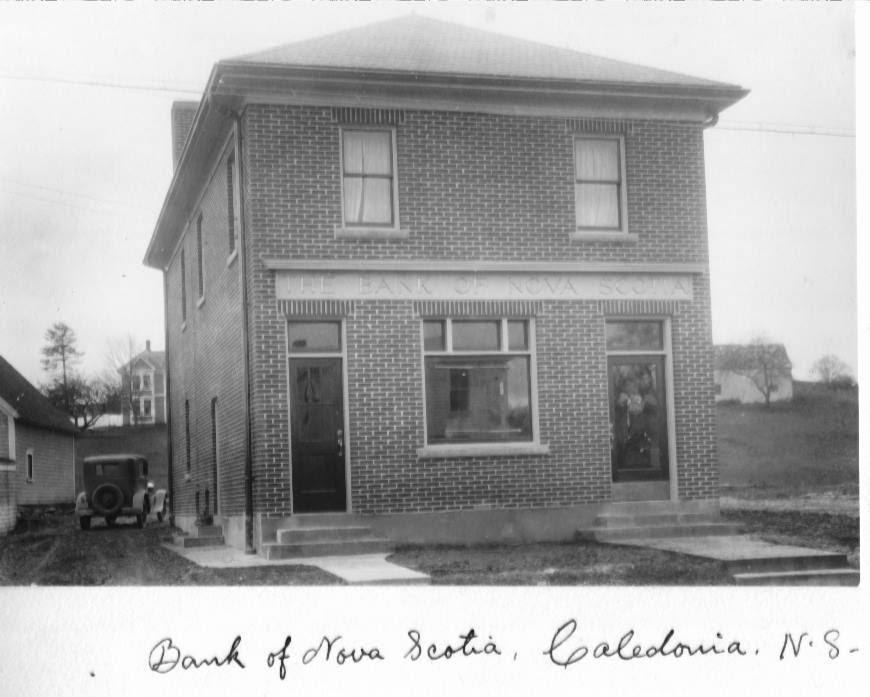
The family name would stay on Caledonia's main street for generations. N.F. Douglas and Company traded from the building at 9849 Main Street - itself the site of the village's first school - for some 130 years, first as a general store and later as a hardware store, before the building became today's pharmacy. The N.F. Douglas mill ran until 2014.
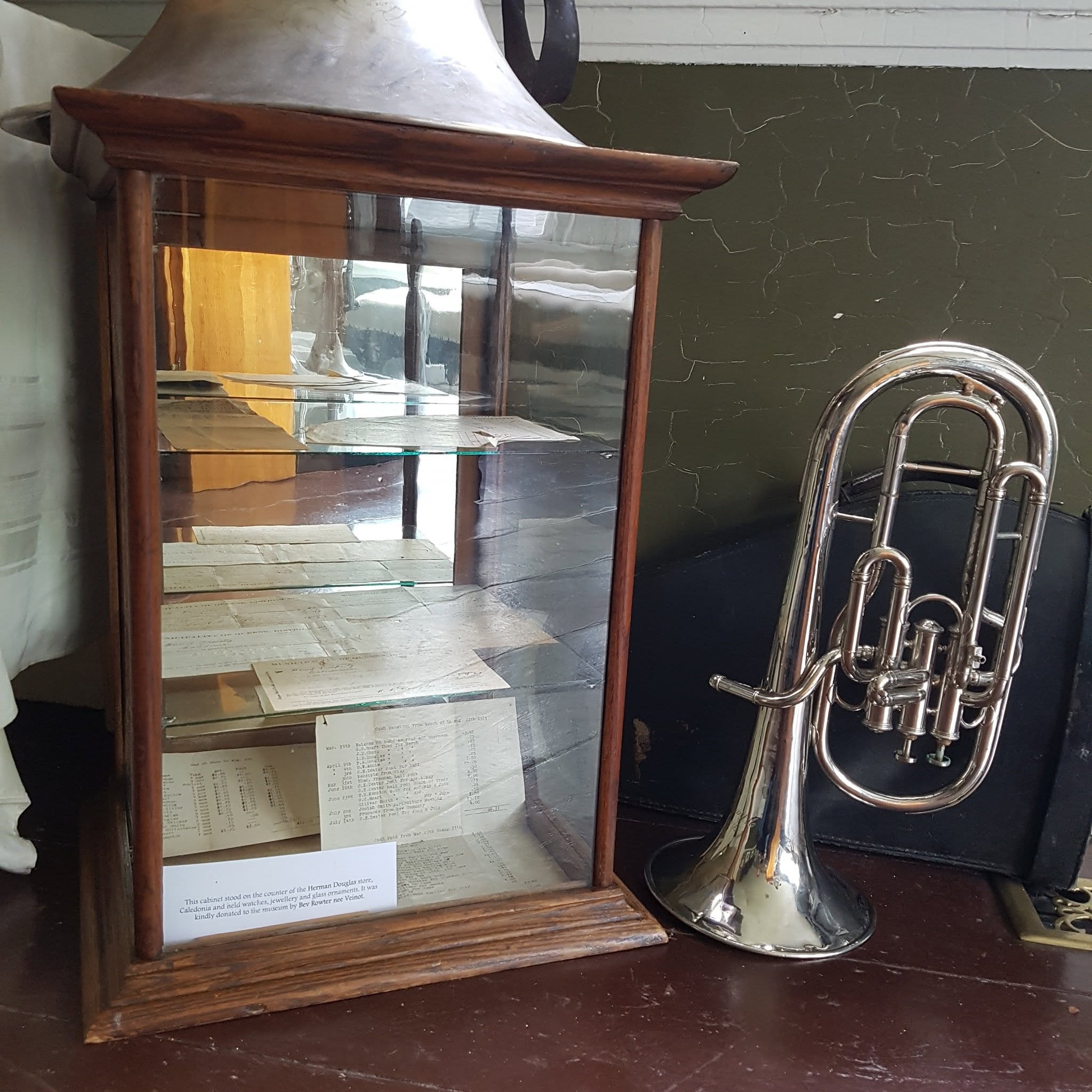
Inside the Heritage House, the N.F. Douglas Store display brings together merchandise, ledgers and records from that long-running business - a remarkable record of who bought what, and on whose credit, in a small Nova Scotia village.
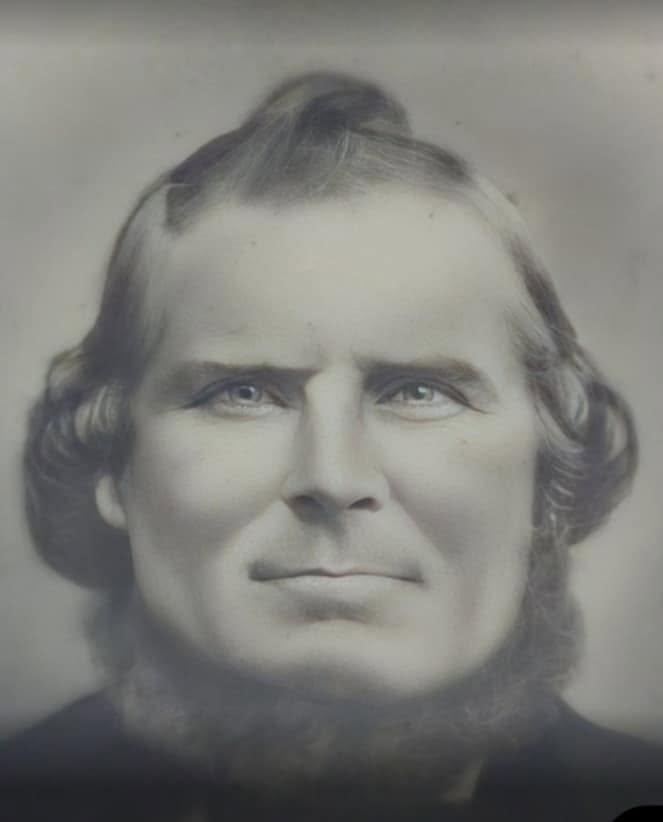
Built in 1854 by Milton and his father John… beside him, Eliza Telfer-Douglas, his wife.
— From the 2026 North Queens Historical Calendar

Every room is furnished with objects given by North Queens families. Click any photograph for a closer look.
01
The wood-fired cookstove, the table set for tea, an old-model washing machine and a muzzle loader with a story behind it.
 02
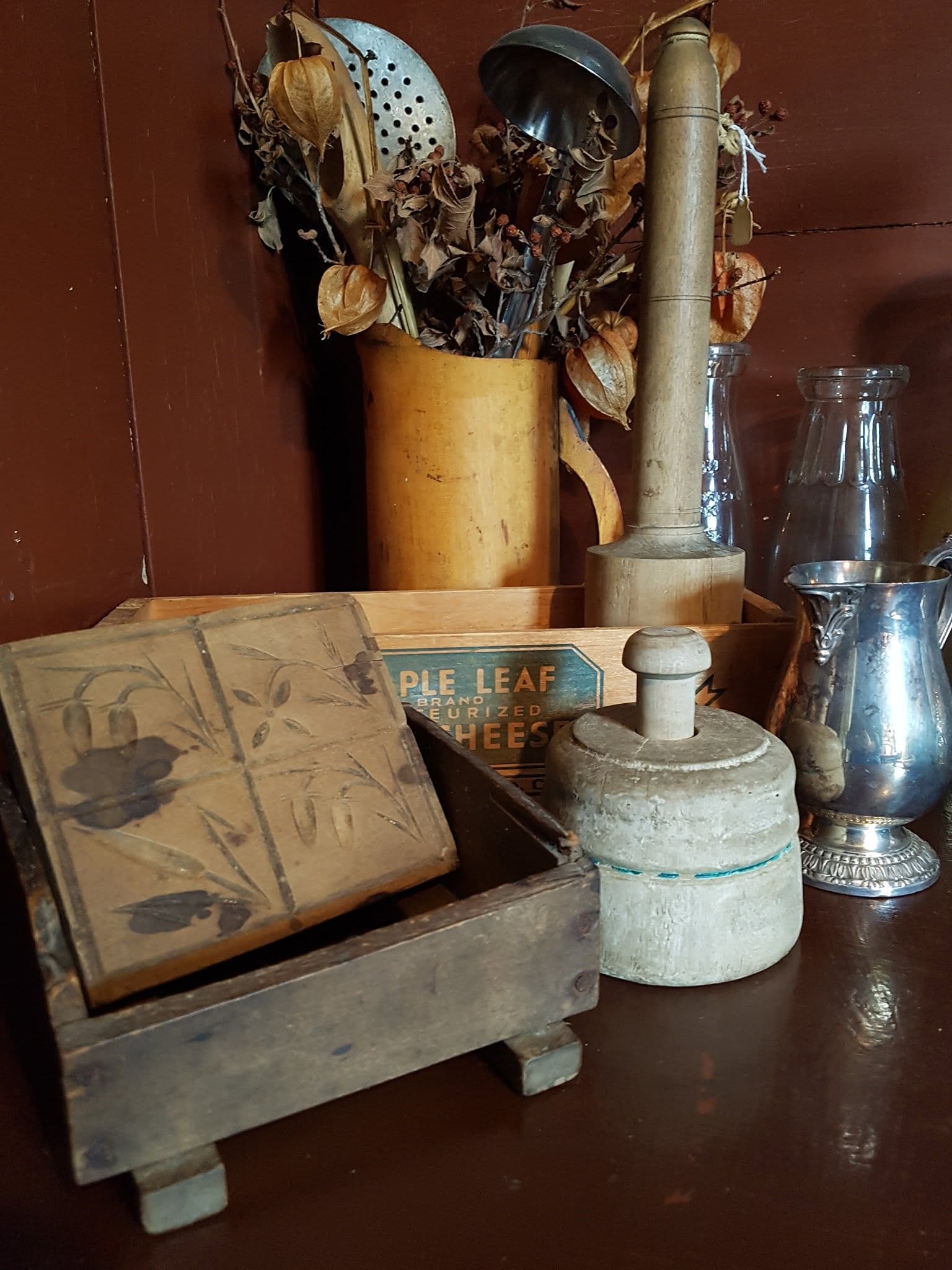
Crocks, butter moulds, sifters and the wooden tools of a nineteenth-century North Queens household.
 03
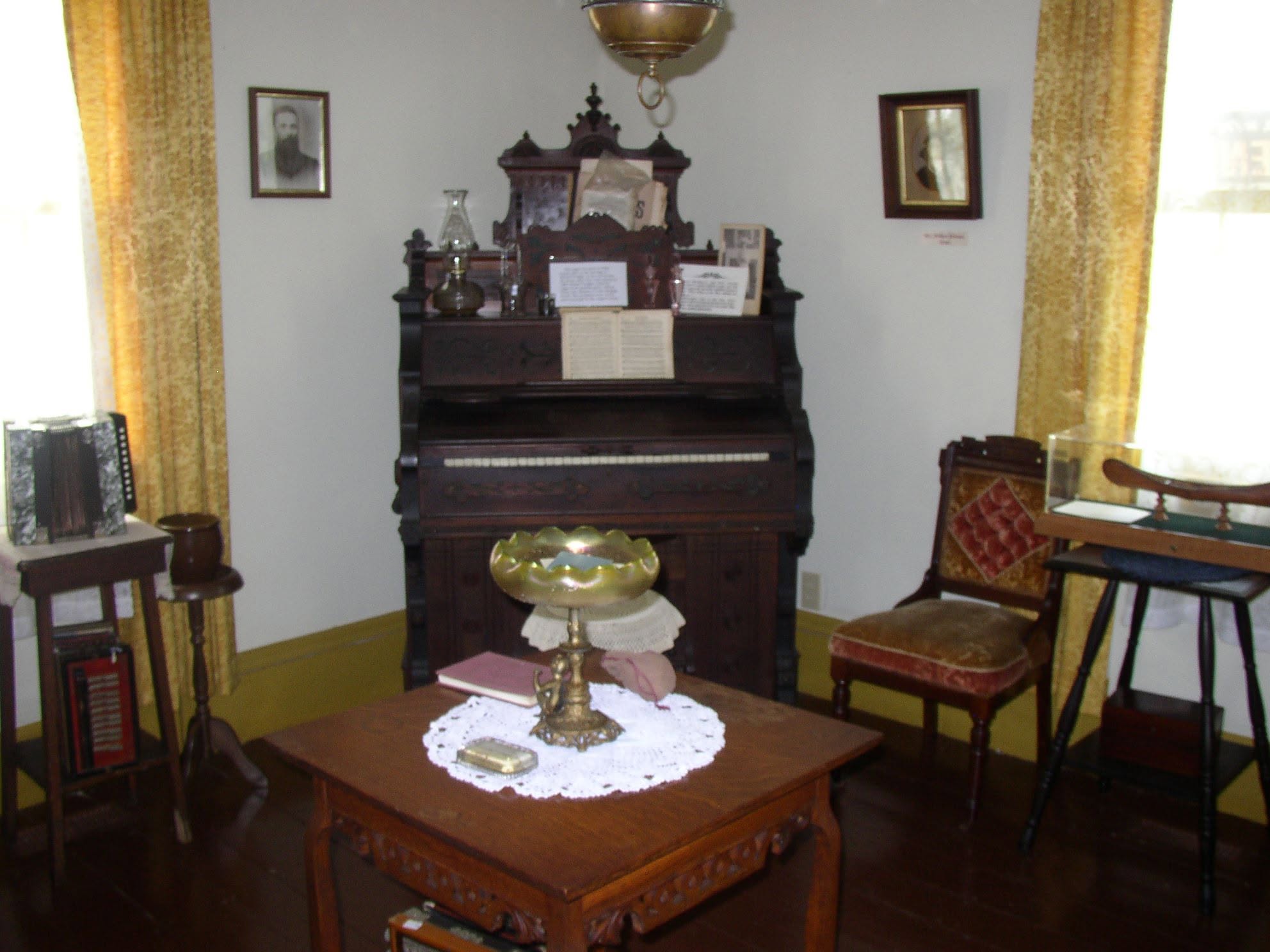
The pump organ, the good chairs and the family portraits - the room kept for Sunday visitors.
 04
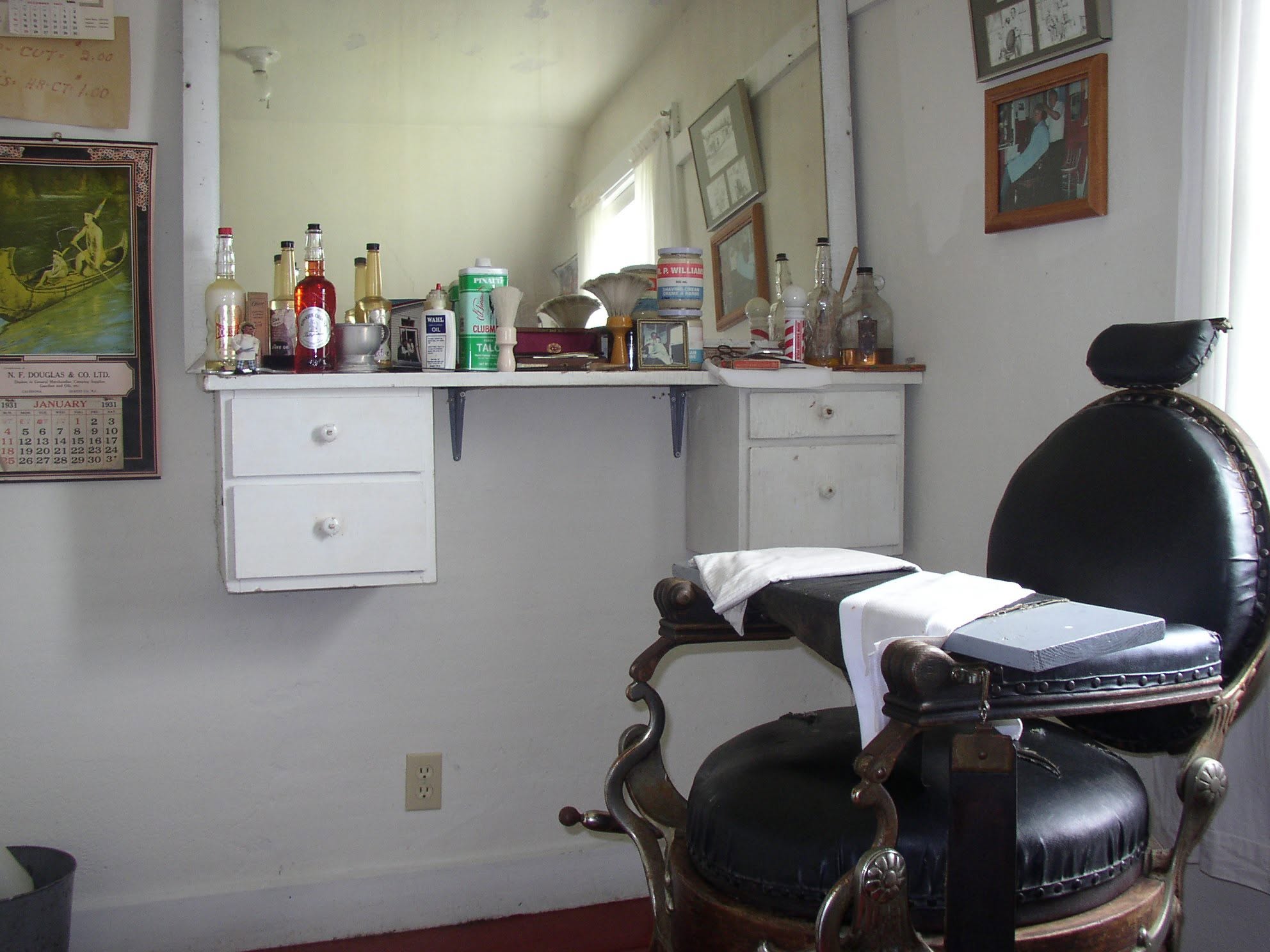
A fully appointed 1930s barber's chair and the bottles, brushes and razors to go with it.
 05
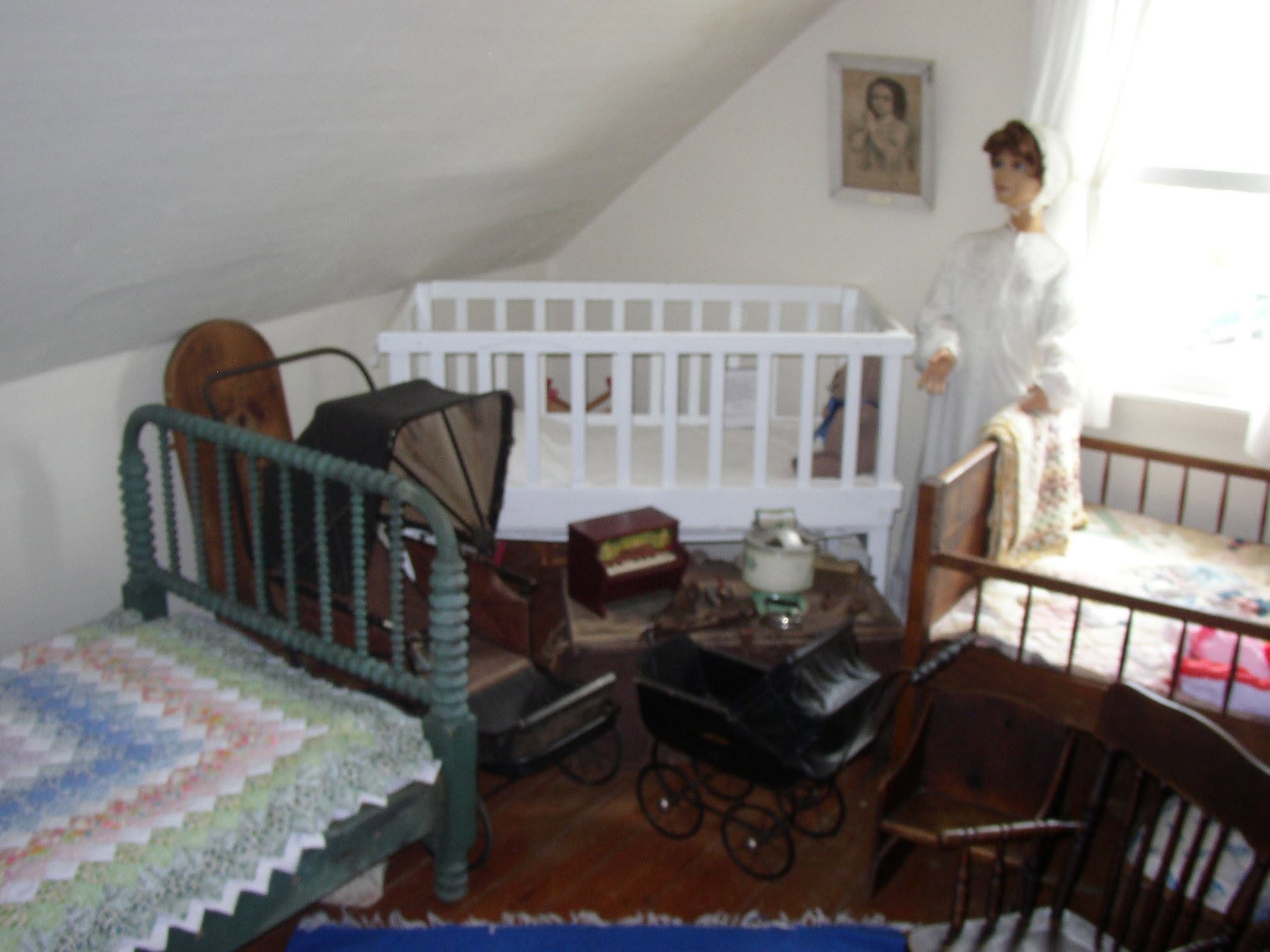
Cribs, cradles, a wicker pram and hand-stitched quilts from local families.
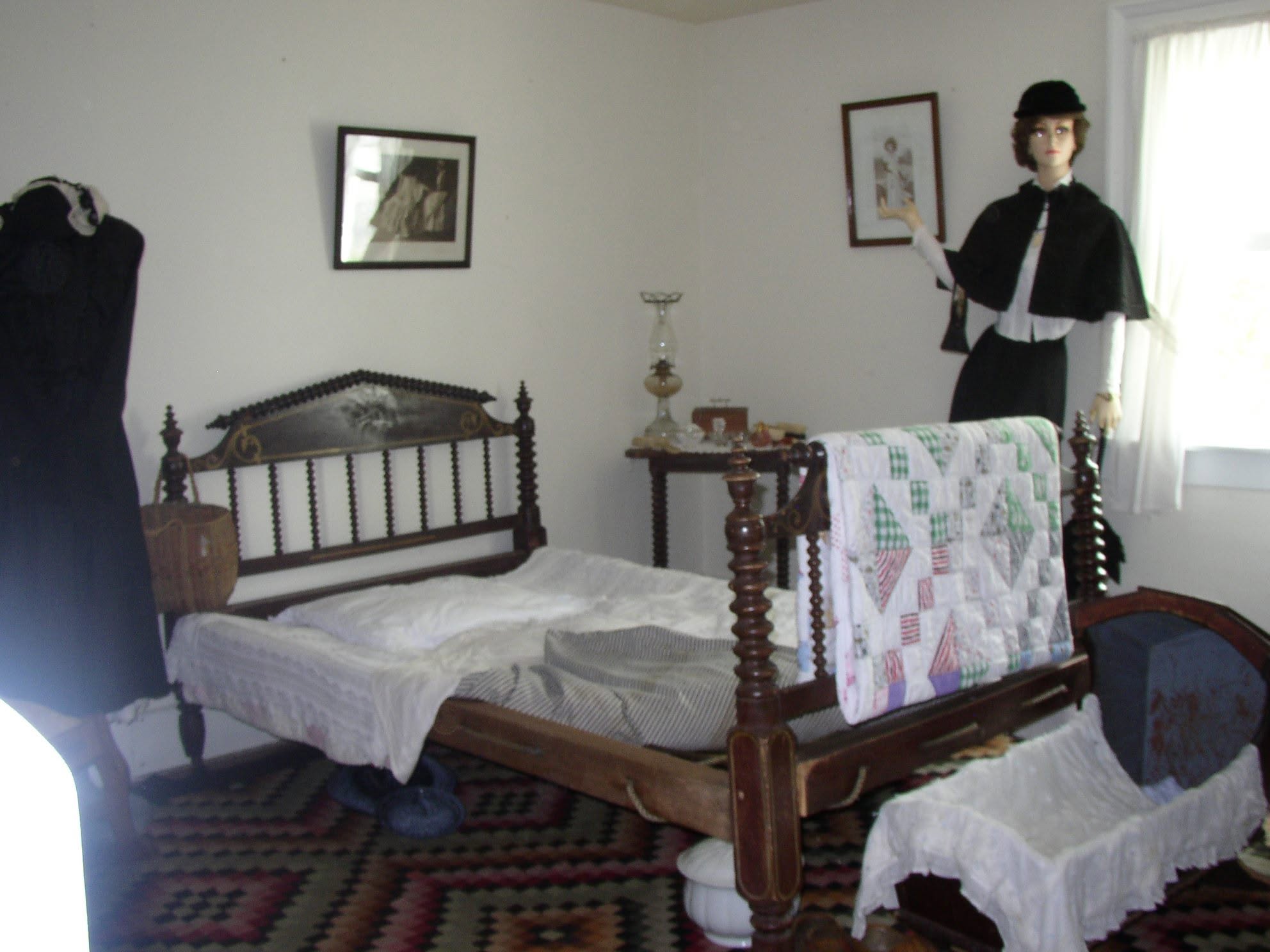 06
A turned-spindle bed, a patchwork quilt and period clothing, laid out as if the owner had just stepped out.
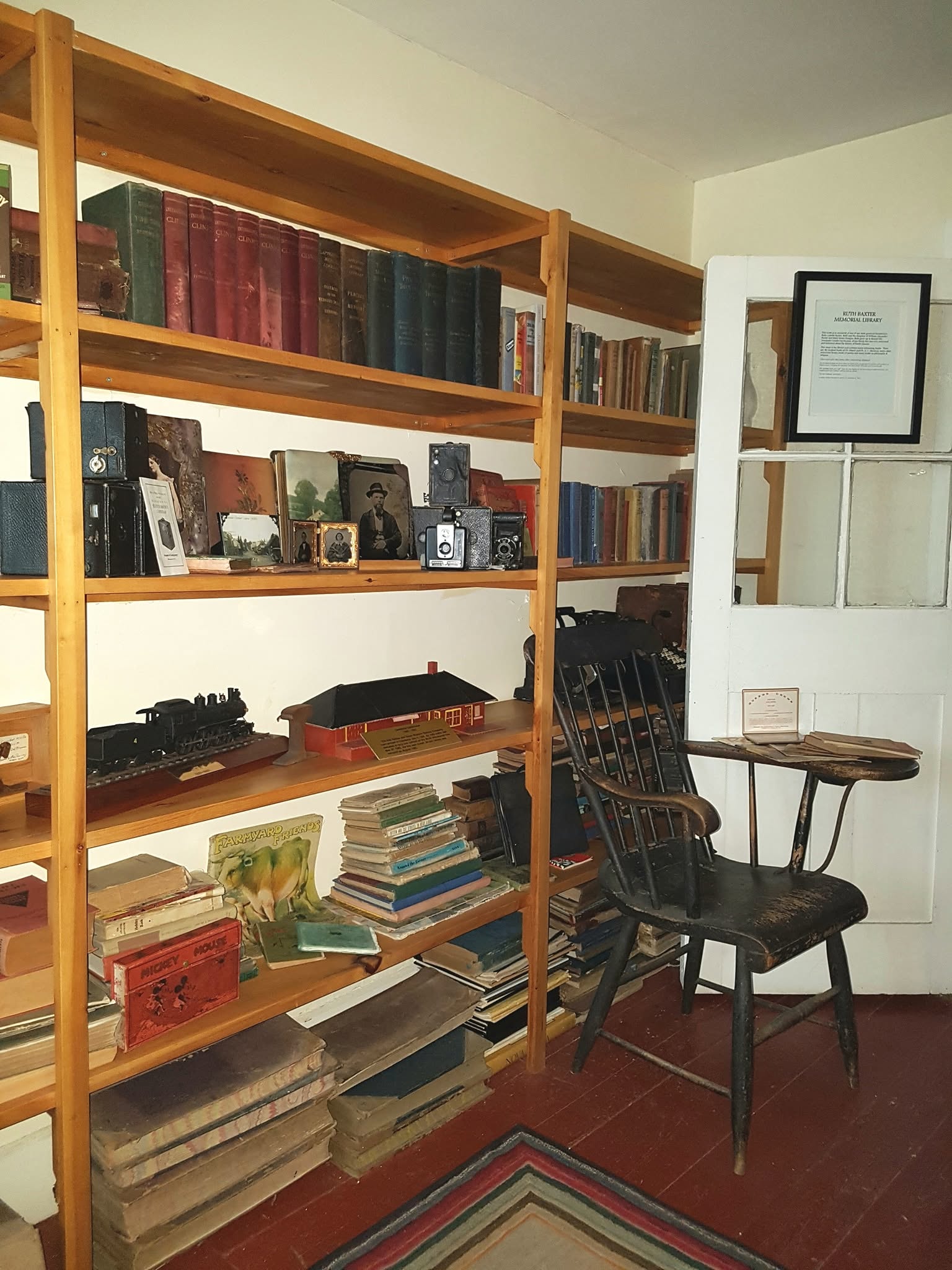 07
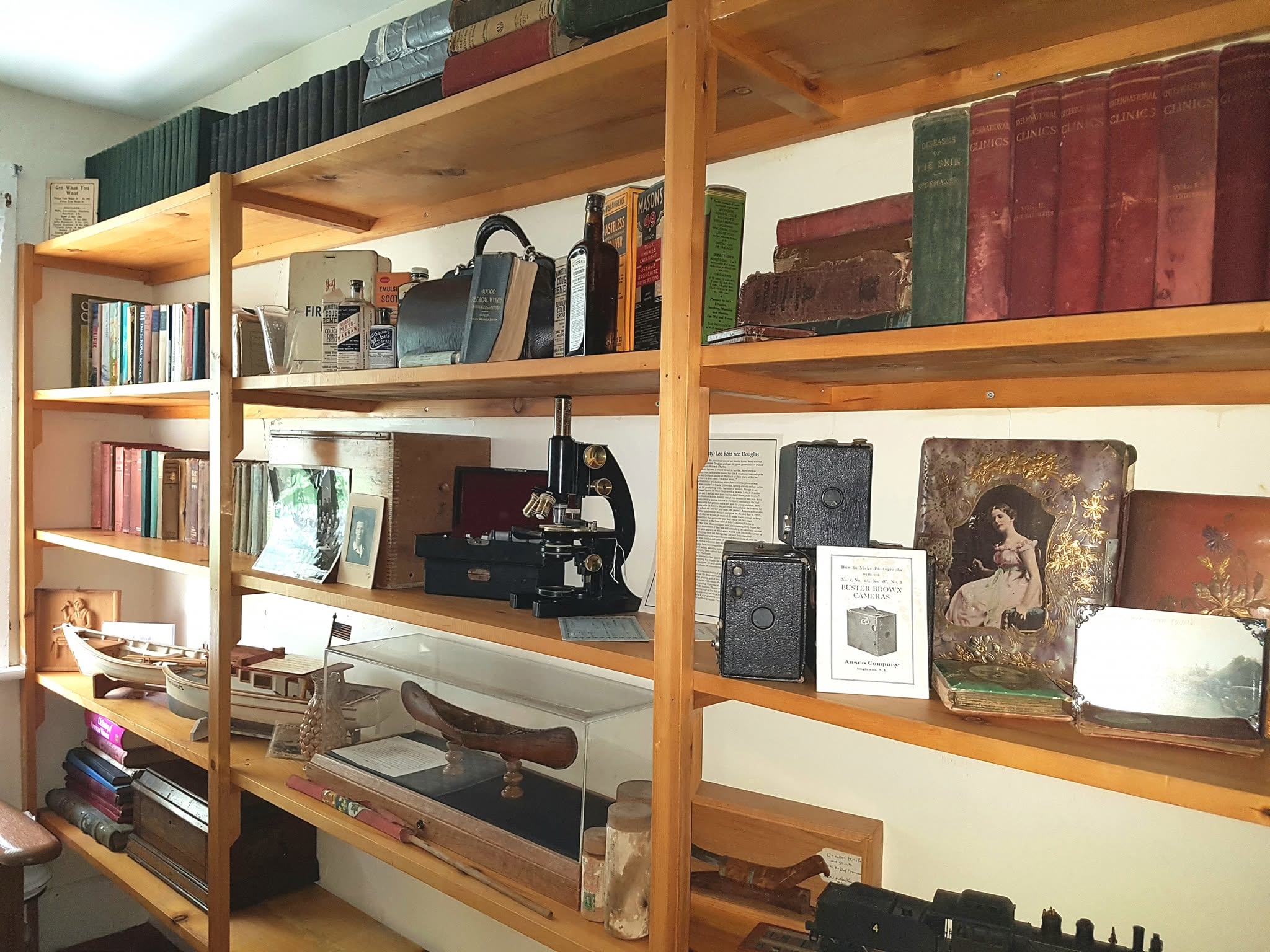
Local histories, family genealogies, school texts and the reference shelves of the research room.
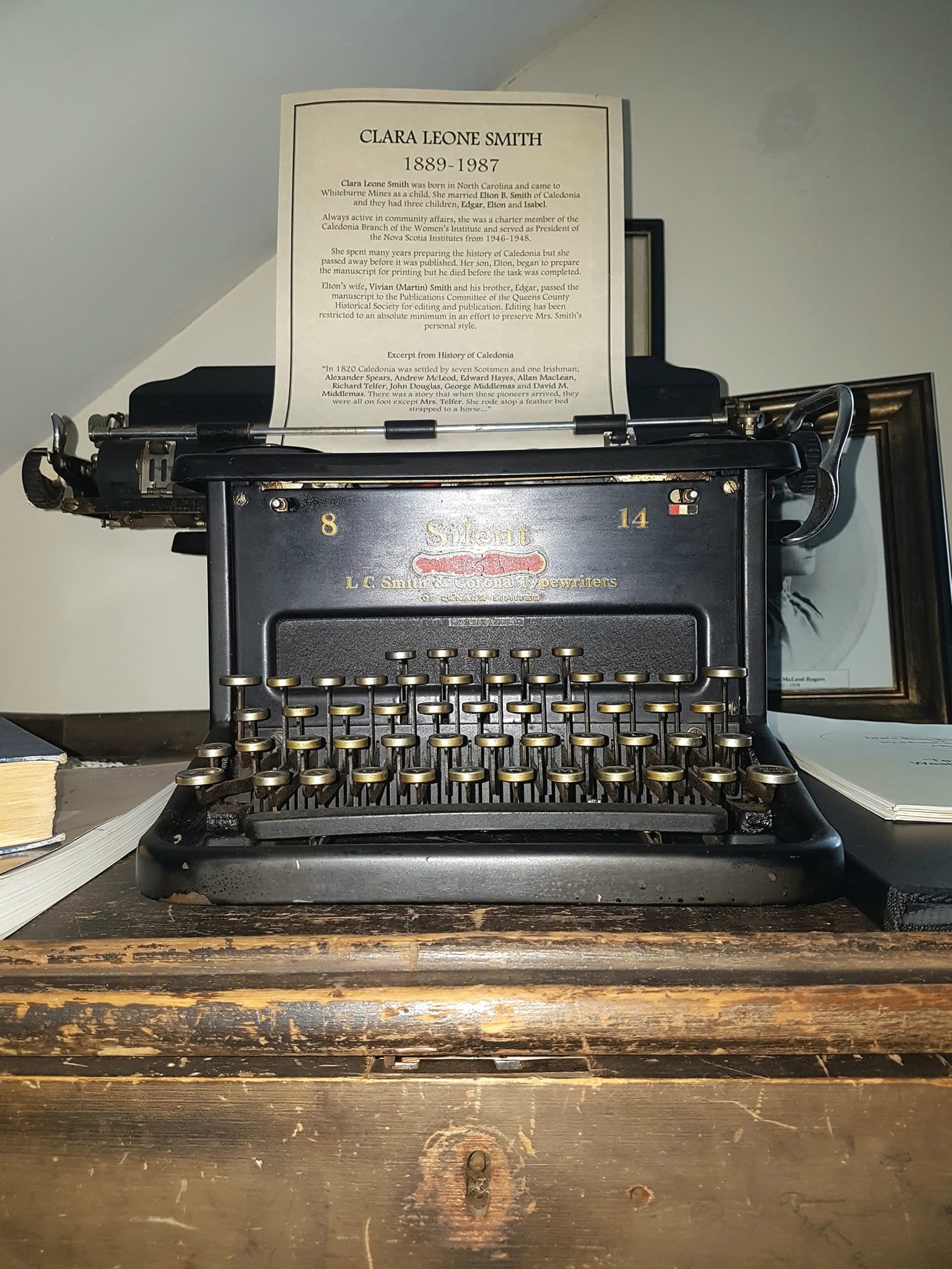 08
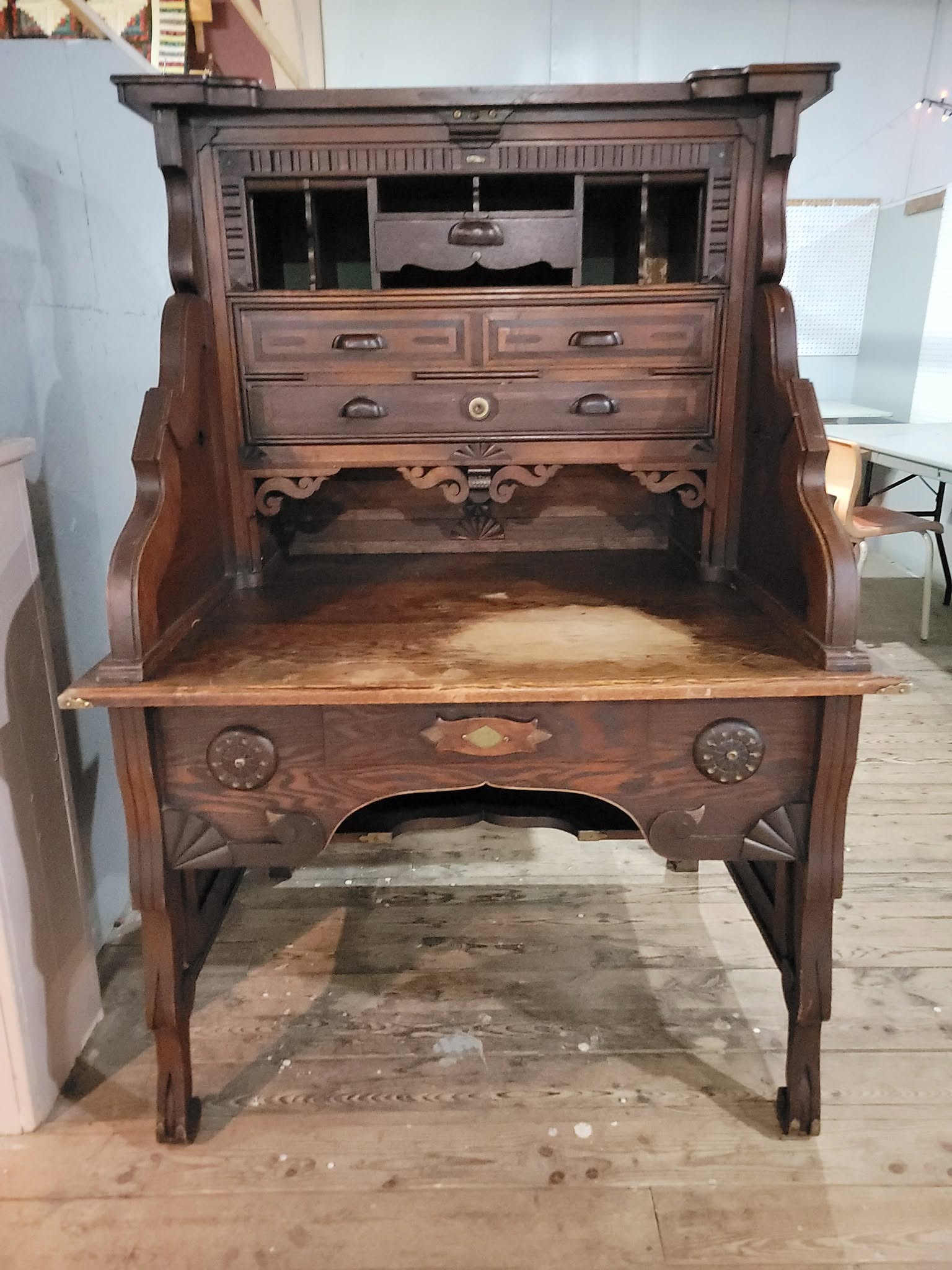
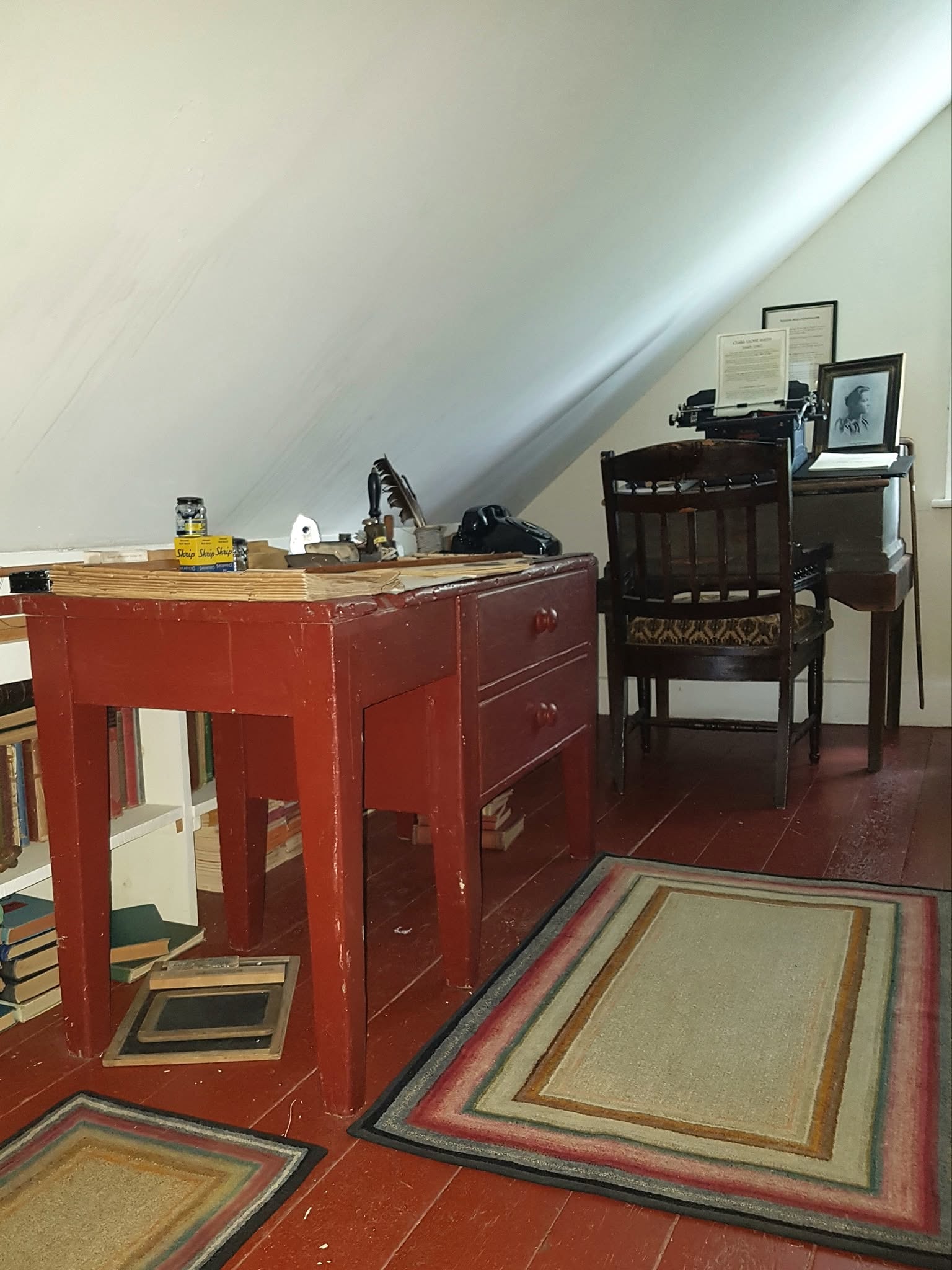
A heavy office typewriter, ledgers and the writing desk where the business of the district was done.
 09
Crosscut saws, peaveys, pulp hooks and the "Rusty Blades and Razor-Sharp Memories" display.
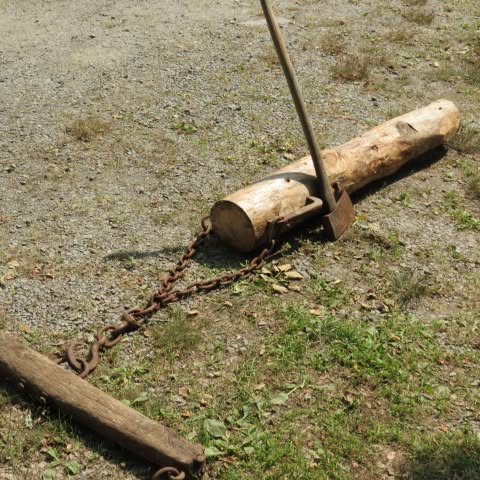
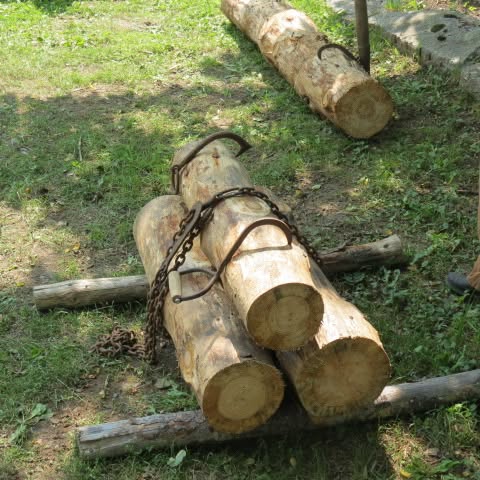
Some of the museum's best-loved pieces are too big to bring inside. Bring a lunch - there are picnic tables - and take a turn around the grounds.
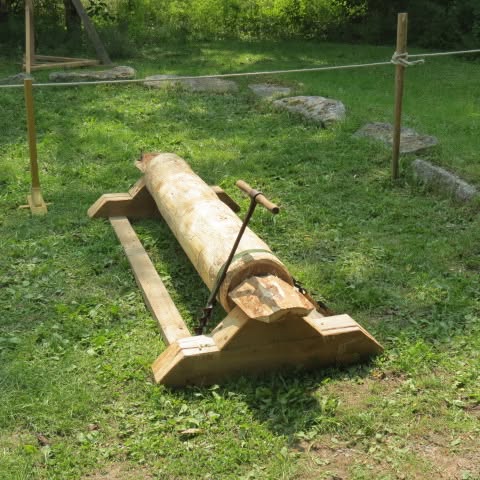

A few minutes from Kejimkujik National Park, just off Route 8 in the village of Caledonia.